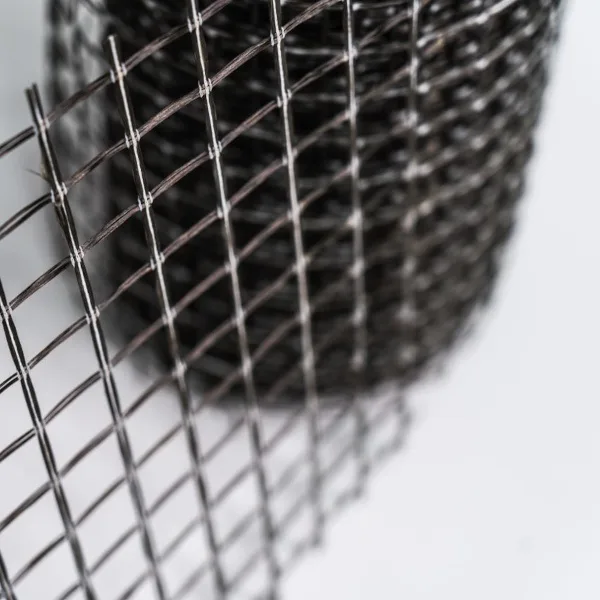
Basalt geogrid supplied by Global Optimals is a critical reinforcement component for road and civil engineering projects across Central Asia. Produced from high‑strength basalt fiber, it delivers a tensile strength of at least 50 kN/m, surpassing most international specifications. The grid features a cell size ranging from 20 × 20 mm to 40 × 40 mm, providing uniform load distribution and improving soil stability. A polymer coating gives the material excellent alkali resistance and maintains performance at temperatures up to +400 °C. This geogrid is widely used in road construction, slope protection, dam embankments, fill layers, railway ballast stabilization and erosion control. Its high tensile capacity and chemical inertness ensure durability in humid environments and saline solutions. For storage, rolls should be kept in a dry, ventilated area, protected from direct sunlight and mechanical damage. Transportation is performed in sealed containers with anti‑slip securing. During installation the geogrid is laid without seams; joints are secured by welding or mechanical clamps, guaranteeing long‑term integrity of the reinforced structure. The product fully complies with ASTM D4752 and exhibits a friction coefficient of 0.6, enhancing soil stabilization efficiency. During transport, rolls are wrapped in polyethylene film to protect against moisture and mechanical damage. Design calculations should include a safety factor of 1.5 to ensure long‑term durability. The geogrid has also passed UV‑resistance testing, guaranteeing retained mechanical properties under prolonged sunlight exposure. Basalt fibers are produced by melting natural basalt rock and drawing it into continuous filaments, a process that yields fibers with high thermal stability, low elongation, and inherent resistance to chemical attack. In geotechnical applications the basalt geogrid is often combined with geocomposite systems, such as geomembranes for waterproofing or geotextiles for filtration, creating multi‑layer solutions that both reinforce and protect the subgrade. When used in clay‑rich soils, pre‑compaction of the sub‑grade before laying the grid improves contact and maximizes load transfer, effectively increasing the soil’s modulus of elasticity. The material’s inert nature also makes it compatible with lime‑based or cementitious soil stabilizers, allowing designers to employ chemical stabilization without degrading the geogrid’s structure. Additionally, the low coefficient of thermal expansion of basalt fibers reduces the risk of thermal cracking in freeze‑thaw cycles, making the geogrid suitable for cold‑region projects where temperature fluctuations are severe.
| Прочность | ≥50 kN/м |
| Ячейка | 20×20 – 40×40 мм |
| Покрытие | Полимерное |
Rolls 50–100 m²
The basalt geogrid should be stored in a dry, well‑ventilated area protected from direct sunlight and moisture. Recommended storage temperature is between +5 °C and +25 °C; temperatures outside this range may reduce flexibility and mechanical performance. When packaging remains intact, the typical shelf life is 12–24 months. During transport and unloading avoid mechanical impacts, sharp bends, and ensure the polymer coating remains undamaged to prevent ingress of aggressive agents.