Caustic soda 99 % (CAS 1310‑73‑2) is a high‑purity sodium hydroxide specifically formulated for the mining sector. The product density is 1.5 g/cm³ and it dissolves completely in water (100 % solubility at 20 °C), providing rapid and uniform solutions for reagent preparation. With a purity of ≥99 %, the grade contains no interfering impurities, which is essential for maintaining stable pH during flotation and for efficient metal precipitation in leaching processes. In mining operations caustic soda is employed as a pH regulator in flotation circuits and as a leaching agent to accelerate metal extraction from ore slurries. In hydrometallurgy it supports the dissolution of gold, copper and rare‑earth elements, where an alkaline environment enhances reaction kinetics. The material is supplied in flakes, granules or as a 50 % aqueous solution, allowing users to select the most suitable form for their process design. Sodium hydroxide is highly reactive with acidic reagents, forming sodium salts that are useful for neutralizing acidic tailings and for preparing electrolytic baths. It is often combined with oxidizing agents such as hydrogen peroxide or with cyanide in leaching to boost oxidation‑reduction reactions, and with carbonate buffers to fine‑tune pH stability. Typical dosing ranges from 0.5 to 2 % of ore weight, targeting a pH of 9‑11 depending on ore composition and desired metal recovery. When adding caustic soda, gradual introduction is recommended to avoid localized overheating and excessive foaming. Storage requirements include a dry, well‑ventilated area protected from moisture and direct sunlight; the product should remain in its original sealed container. Personnel must wear protective gloves, safety glasses and ensure adequate ventilation when handling the chemical.
| NaOH | ≥99% |
| Форма | Хлопья/гранулы/раствор 50% |
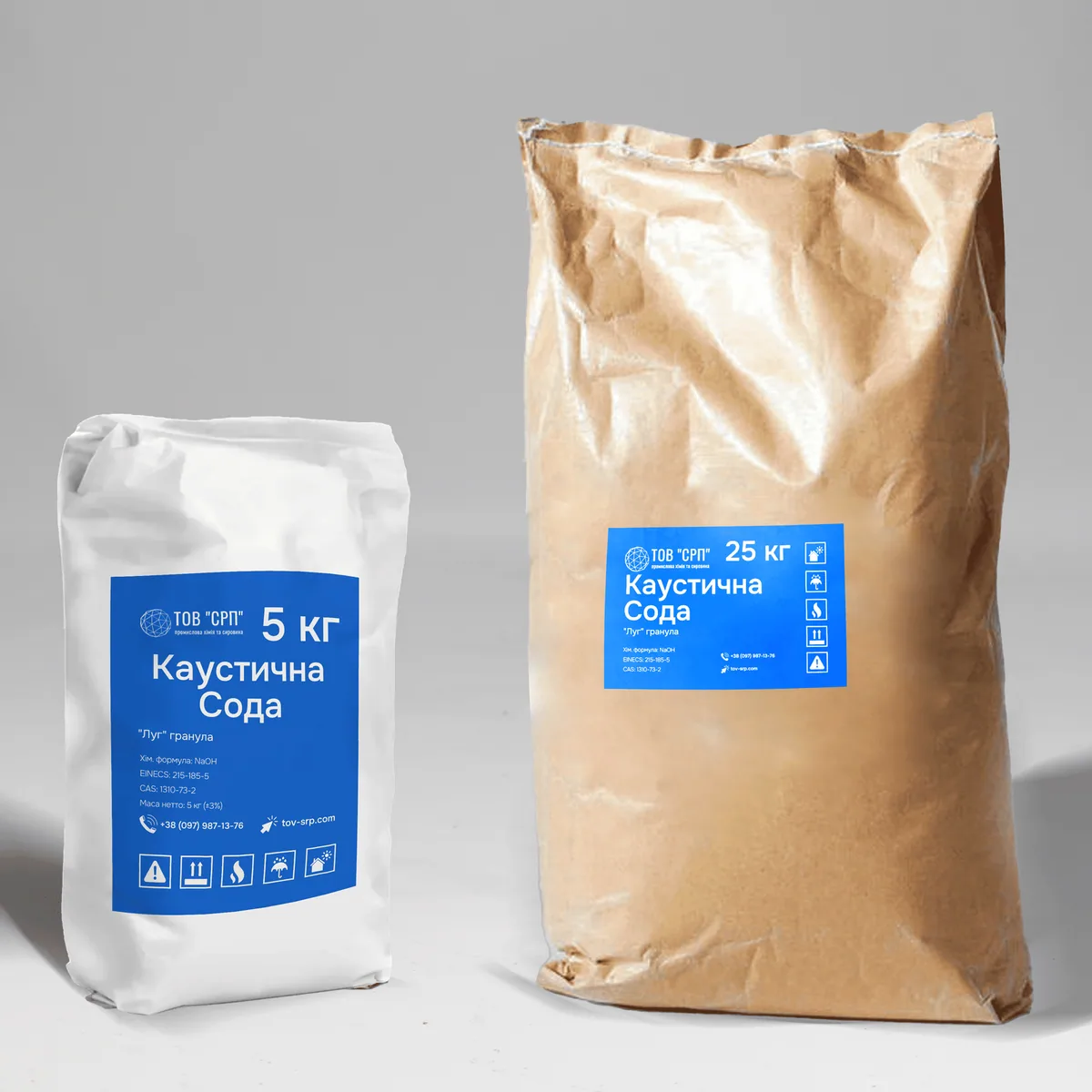
Bags 25 kg / Big bags 1000 kg
Caustic soda must be stored in a dry, well‑ventilated area protected from direct sunlight and moisture. Recommended storage temperature is between +5 °C and +30 °C; deviations may affect product stability. Shelf life is typically 12–24 months provided the packaging remains intact. When handling, wear chemical‑resistant gloves, safety goggles and protective clothing, avoid premature contact with water, and inspect containers for any damage before use.